

Fishing rules in QLD (things like bag limits, size limits and seasonal closures) do not just appear out of nowhere. They are usually based on stock assessments, which are used to estimate how fish populations are tracking over time.
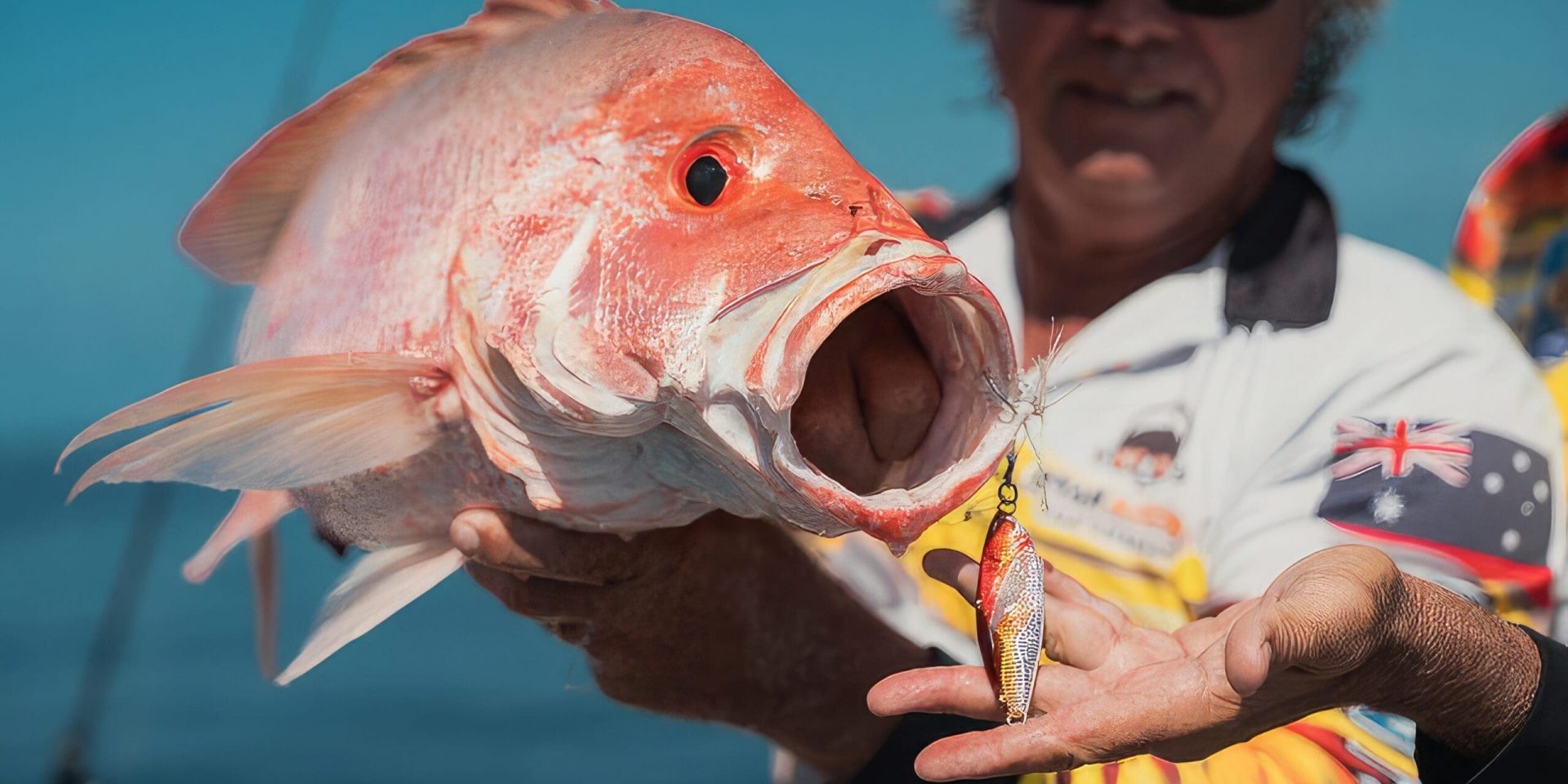
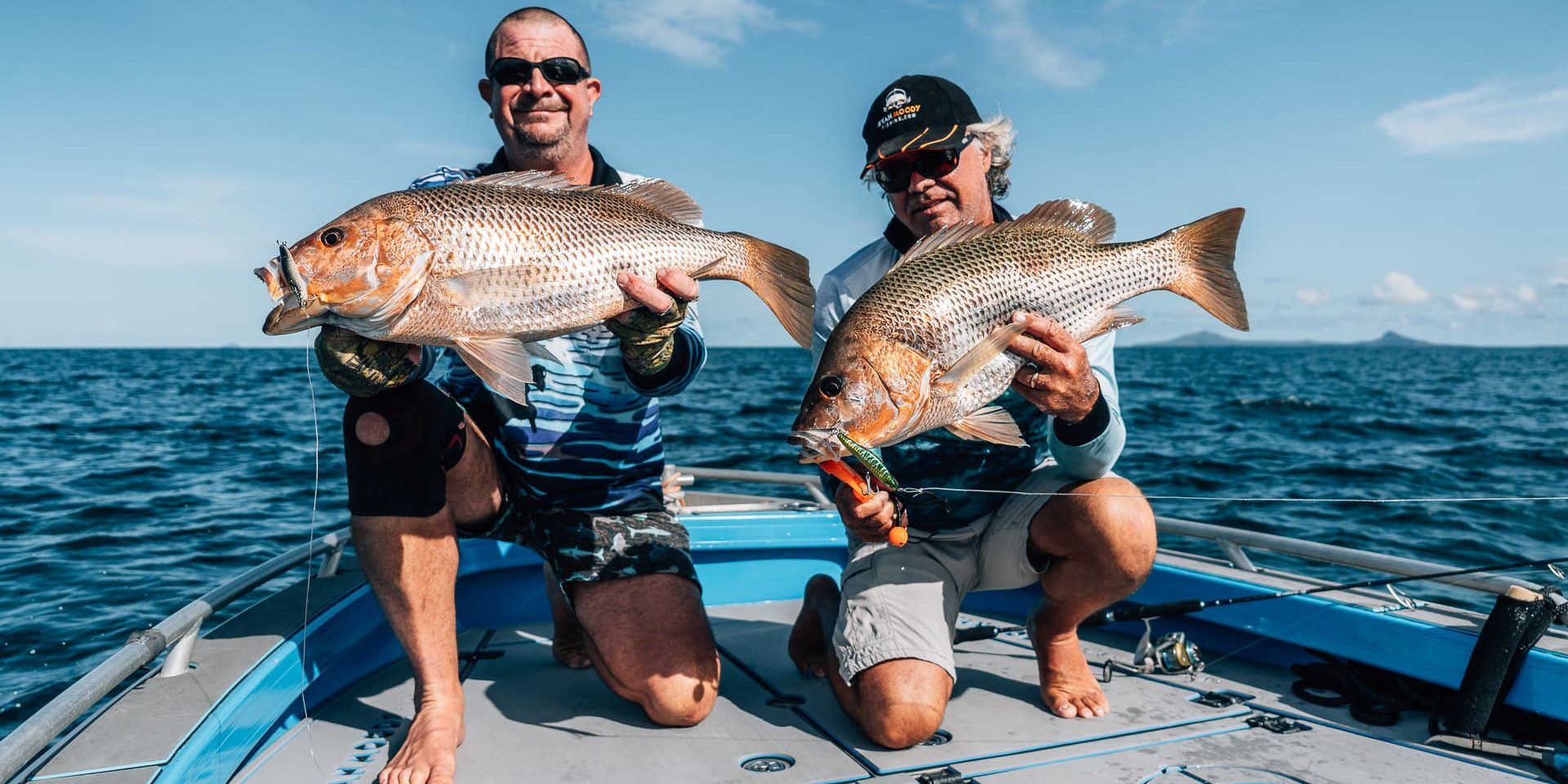
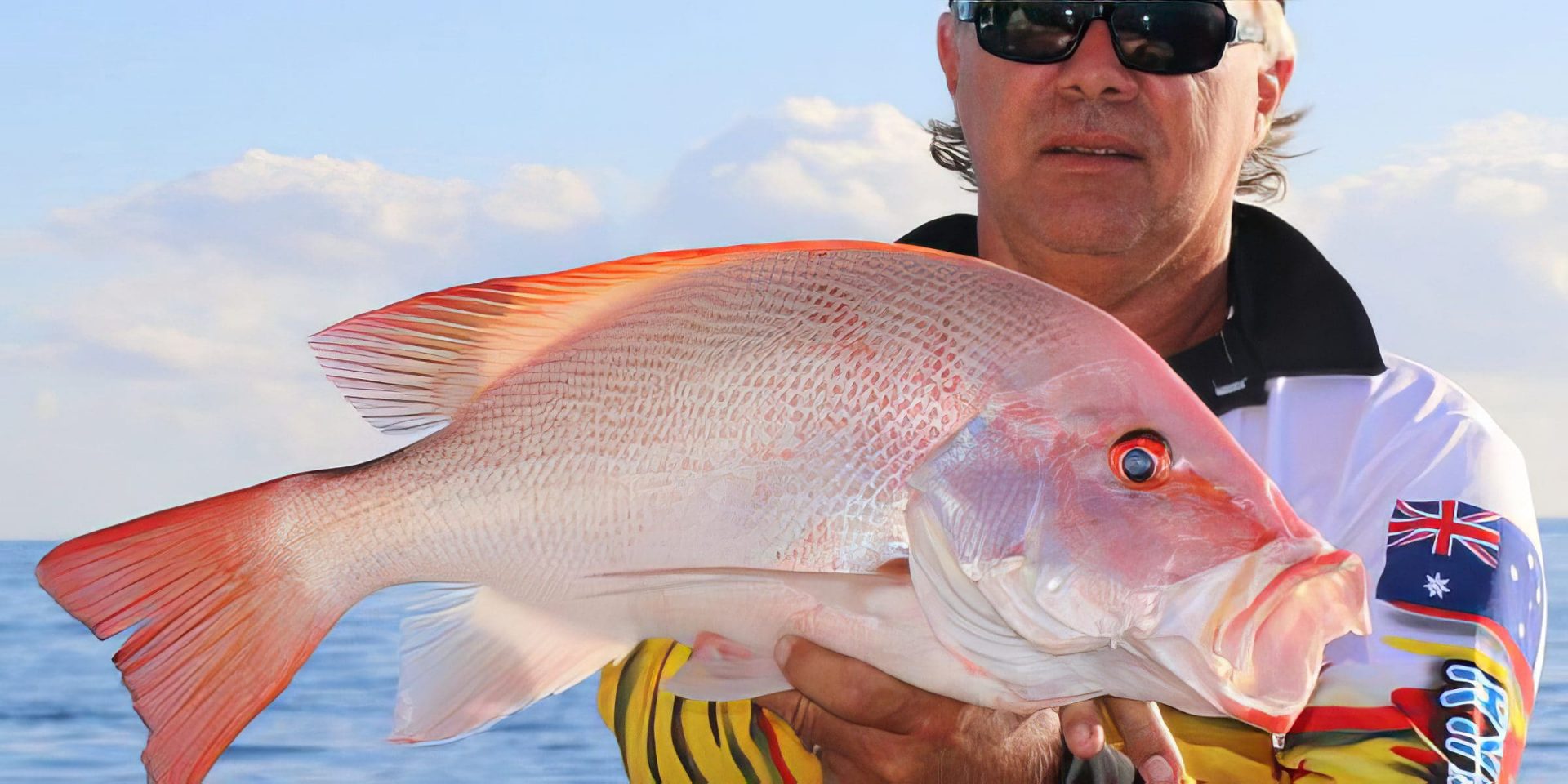
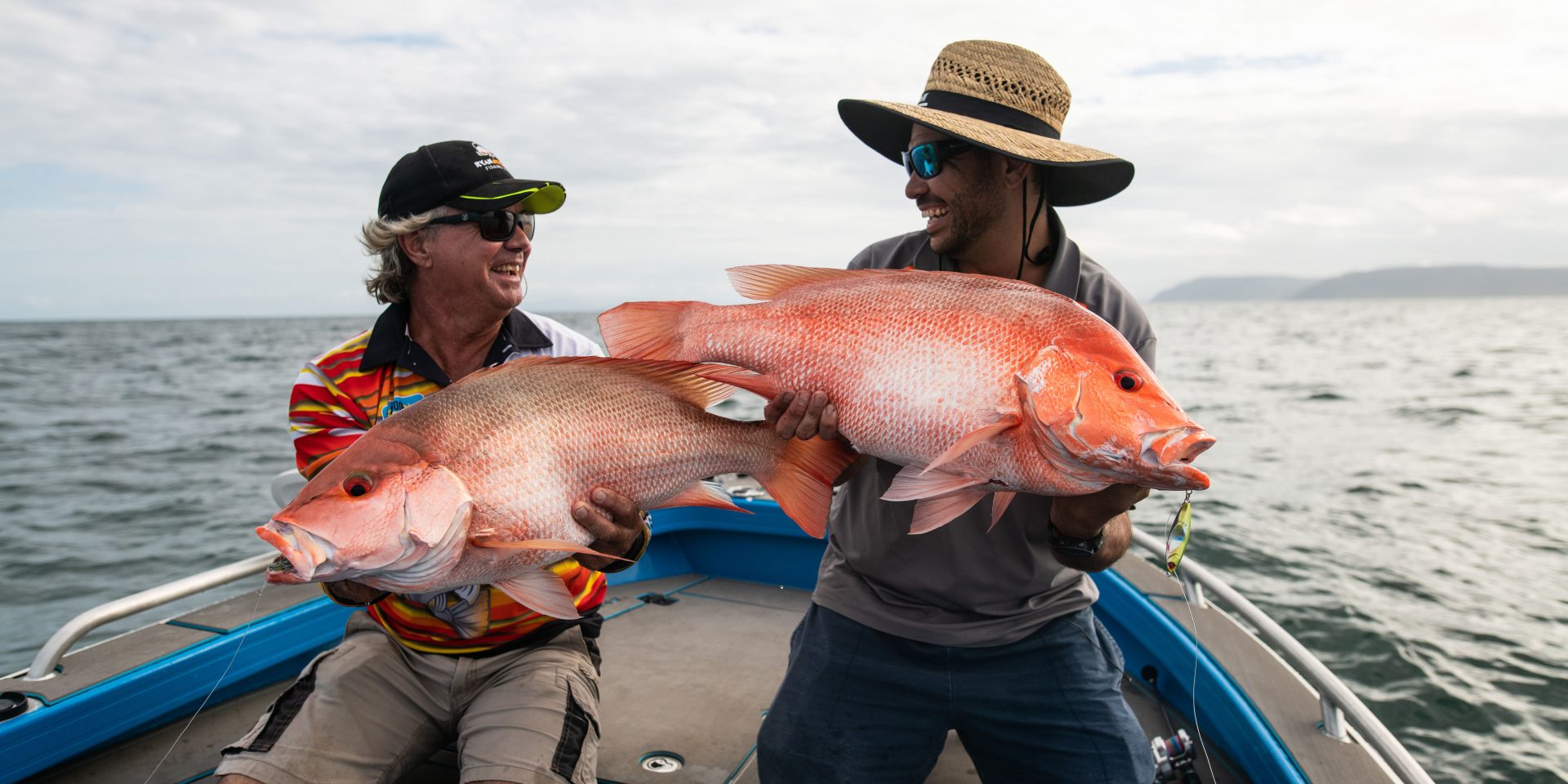
One of the latest examples (as of 2026) is the stock assessment for Queensland east coast saddletail snapper, also known as Large-Mouth Nannygai in Far North Qld. It will likely influence future fishing rules in QLD for both commercial and recreational fishers.
According to the Queensland Sustainable Fisheries Strategy 2017-2027, the target for 2027 is to set sustainable catch limits for all Queensland fisheries of around 60% of their unfished biomass.
So… 100% is what the stock would be with no fishing at all. 60% is deemed to be a healthy, productive level that still allows fishing.
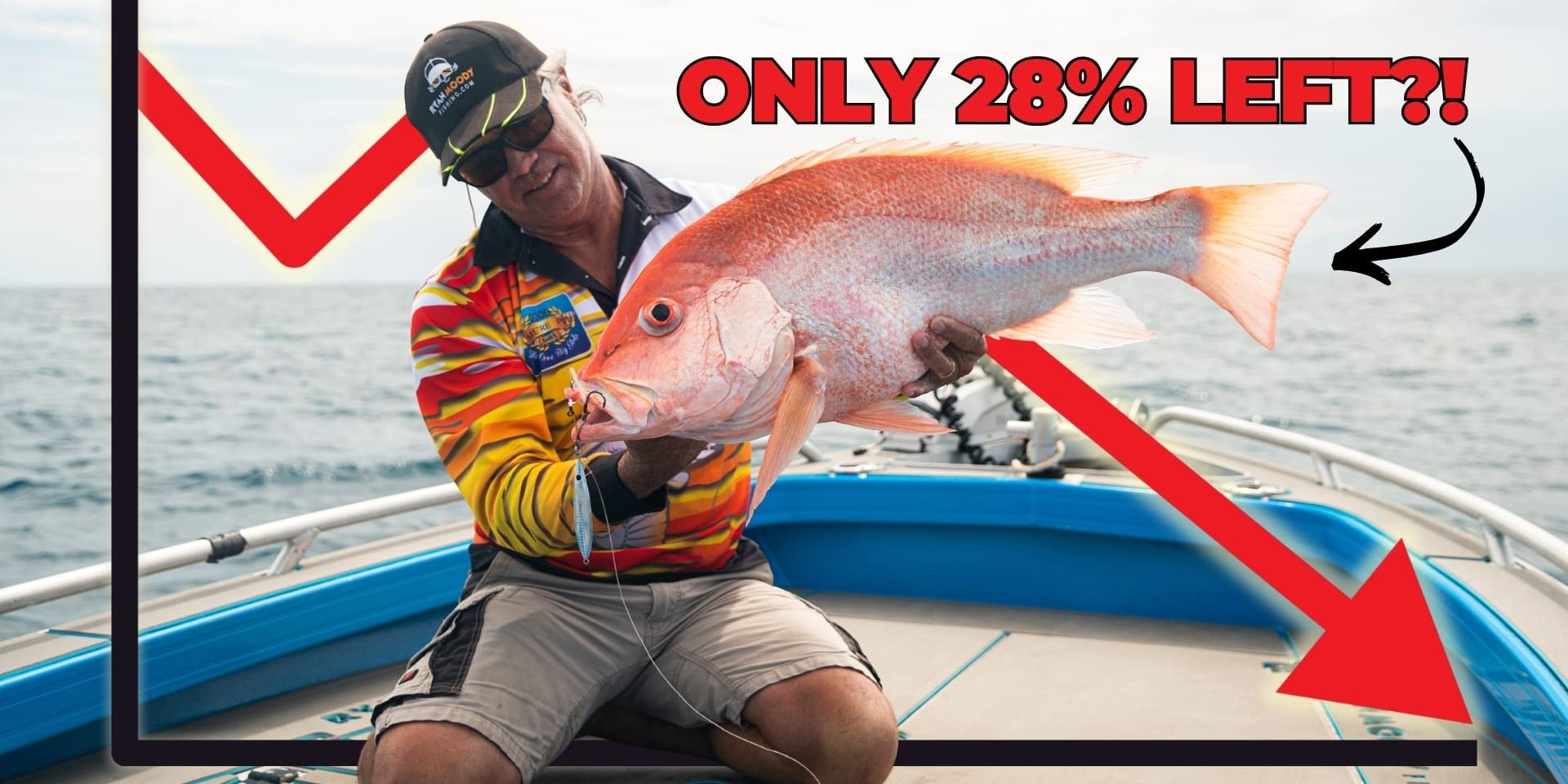
The headline number for the 2026 Saddletail Snapper (Large-mouth nannygai) stock assessment is simple: the stock is estimated to be about 28% of its original size, with a range of 19 to 42 percent. Well below the 60% target.
But as we dig into the data, that number depends on a lot of assumptions.
This article breaks down what the scientists actually did, where the uncertainties lie and how this kind of data feeds into fishing limits in QLD.
What the Latest Saddletail Snapper/Nannygai Stock Assessment Says
A new stock assessment for Queensland east coast saddletail snapper is out now (2026) and it will likely influence future rules for both commercial and recreational fishers.
The assessment uses a standard fisheries model called Stock Synthesis to reconstruct the stock from 1961 to today.
It pulls together commercial logbook data (mostly since the late 1980s), recreational surveys (patchy and mostly recent) and biological data like fish lengths and ages (also mostly recent). From this, the model estimates how the population has changed over time.
Instead of choosing one “best” model, the scientists ran 12 different scenarios and averaged the results. That’s good practice. But it doesn’t remove uncertainty.
In short:
- The stock is estimated at 28% of the original biomass
- Range of results is 19% to 42%
- The result comes from 12 model scenarios, not one single answer
- 28% is well below 60% – heralding changes in management measures incoming!
How Stock Assessments Influence Fishing Rules in QLD
This is the bit that matters beyond just this one report.
Stock assessments like this are one of the main tools used to guide decisions around fishing rules in QLD.
If a stock is assessed as low, tighter rules are more likely. That can mean for example:
- lower bag limits
- changes to size limits
- seasonal closures
- tighter commercial controls
If a stock is stable or improving, rules are more likely to stay the same. So while this report does not directly change anything overnight, it feeds into the process that shapes fishing limits in QLD over time.
At least Queensland are trying to get a handle on stocks prior to making any decisions.
Unlike the blue groper ban in NSW, where decisions were made without a clear stock assessment to back them up. Worth a look if you have not seen it already 👉 “Blue Groper Ban in NSW – Where is The Science?“
The Key Assumptions Driving the Result
The 28% biomass figure depends heavily on three simple things:
- Births: How well the stock can replace itself, also called steepness
- Deaths: How many fish die naturally, also called natural mortality
- Growth: How fast fish grow and reach breeding size, also called growth rate
👉 Read more about fingermark and how they’re vulnerable to overfishing because of slow growth, late maturity and staying in the same areas
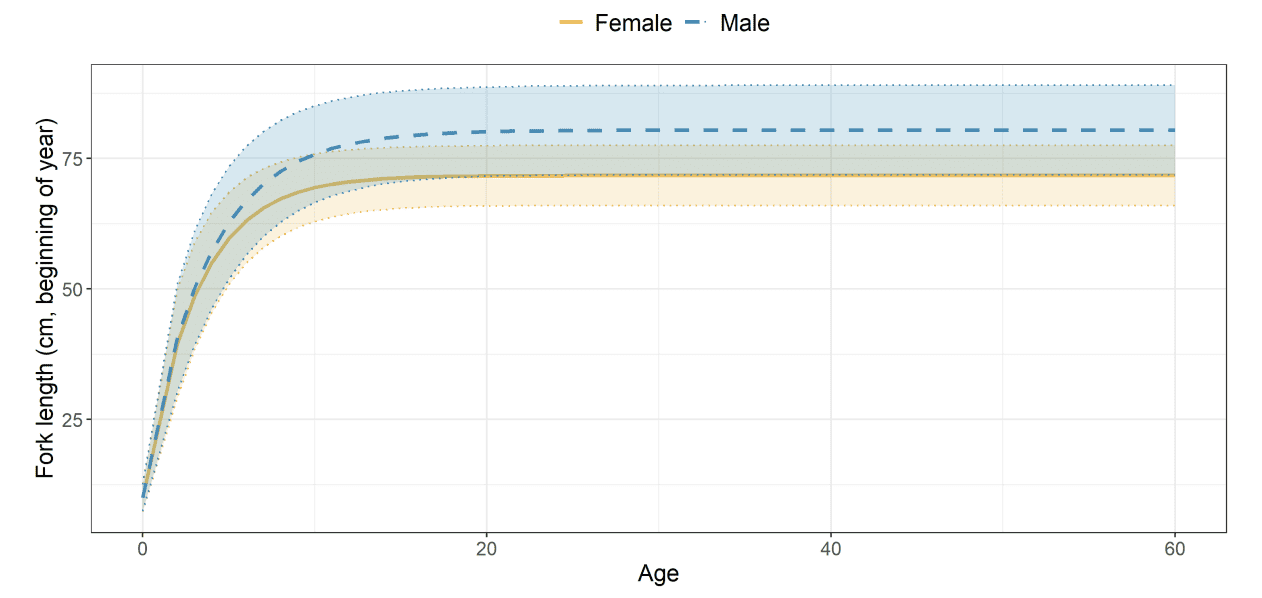
Here is the catch: Steepness and natural mortality could not be estimated from the data, so they were assumed.
Growth is data-based, but it is still influenced by how the data is weighted and how much importance the model gives it.
So while growth is not simply guessed, it is not completely free of assumptions either.
What this means
The result is partly based on data and partly based on assumptions.
Why that matters
If any of these assumptions are off, the outcome shifts.
- Too many births assumed and the stock looks healthier
- Too many deaths assumed and it looks worse
- Get growth wrong and it changes how quickly the stock appears to rebuild
Small changes in these assumptions can shift the final result.
The Biggest Gaps in the Assessment
1) Treating the Whole Coast as One Stock
The model treats the entire Queensland east coast as one connected population. That includes fish from Cairns, the Swains, inshore reefs, offshore reefs and green zones, all assumed to mix together.
In reality, things are likely more uneven.
- About a third of the reef is closed
- Many areas barely get fished due to remoteness
- Access is often limited by weather
Some places get hammered, while others are barely touched.
Big fish do not move far. The main connection between areas is eggs and larvae drifting with currents.
The model uses catch data from where people actually fish and assumes it represents the whole stock. But it does not directly measure fish in closed or remote areas.
Bottom line: It’s treated as one stock, not because that’s been proven, but because there is not enough data to split it up.
The report says it couldn’t detect spatial structure. That doesn’t prove there isn’t any, just that there isn’t enough data to resolve it.
Why this matters:
If fish don’t mix as much as assumed, protected areas may hold more biomass while fished areas are more depleted.
The model averages everything together, which can hide that difference.
2) The Role of CPUE (Catch Rates)
A major part of the model relies on catch rates, or how many fish are caught per unit effort (CPUE). These are adjusted for gear, vessel differences and fishing methods.
The issue is that standardisation adjusts how people fish, but not where they fish.
Most data comes from accessible areas, not green zones or remote reefs. So if fish are depleted where people fish but still abundant elsewhere, catch rates drop and the model may interpret that as a decline across the whole stock.
3) Shark Depredation: a MAJOR Unknown
The model includes shark depredation, where fish are eaten before they are landed.
This matters, but there’s no long-term dataset, trends over time are assumed, and it’s only recently been included in models like this.
If depredation is set too high, the model estimates more fish are being lost and the stock appears smaller.
Depredation assumptions used in the model:
- 58% depredation in 2025 for recreational, charter and Traditional Owner sectors (combined)
- 29% depredation rate in 2025 for the commercial sector (assumed as half of 58%)
- 1% depredation rate from 1961 to 2009 (constant)
- Linear increase from 1% (2009) to 2025 levels (58% / 29%)
What that actually means (just plainly)
The model is assuming:
- Depredation was basically negligible (1%) for ~50 years
- Then it ramps up in a straight line from 2009 onward
- Reaching very high modern values (58% for rec/charter/TO AND 29% for commercial)
How did they reach these numbers?
Recreational:
Boat ramp survey data estimated 1138 saddletail snapper retained and 666 depredated, giving a depredation rate of 0.585. This represents depredated fish as a proportion of retained catch; Meaning that for every 100 fish landed, the model assumes roughly 58 additional fish were lost to depredation.
This estimate from a very small sample size is then scaled up to represent the broader fishery.
I also wonder if the fish were sharked – how they knew they were saddletail snapper/nannygai! There is a convoluted method in the assessment to somehow account for this, but it seemed like grasping at straws to me – the uneducated fisho.
Commercial:
The commercial depredation rate is not estimated from commercial data. It is assumed to be half of the recreational rate, giving 29%.
That assumption doesn’t reflect how commercial fishing actually operates. Depredation varies heavily depending on location, method and behaviour.
Commercial operators are not fishing the same areas as most recreational anglers, and they are not fishing the same way. Techniques like handlining bring fish up quickly, and experienced operators often target isolated ground away from heavily fished reefs where shark activity is lower.
In those conditions, depredation can be minimal. For example, on a recent northern trip from a local pro, around of ALL the nannygai he landed with just one Chinaman fish lost to sharks: Only 0.3% total depredation and 0% saddletail/nannygai depredation.
We see the same pattern ourselves. When fishing isolated offshore areas away from reef pressure, we routinely catch saddletail snapper/nannygai without experiencing shark depredation. This is a key reason we developed our offshore opportunities and wonky holes courses — to help fishers locate nannygai away from shark-dense areas and save fuel.
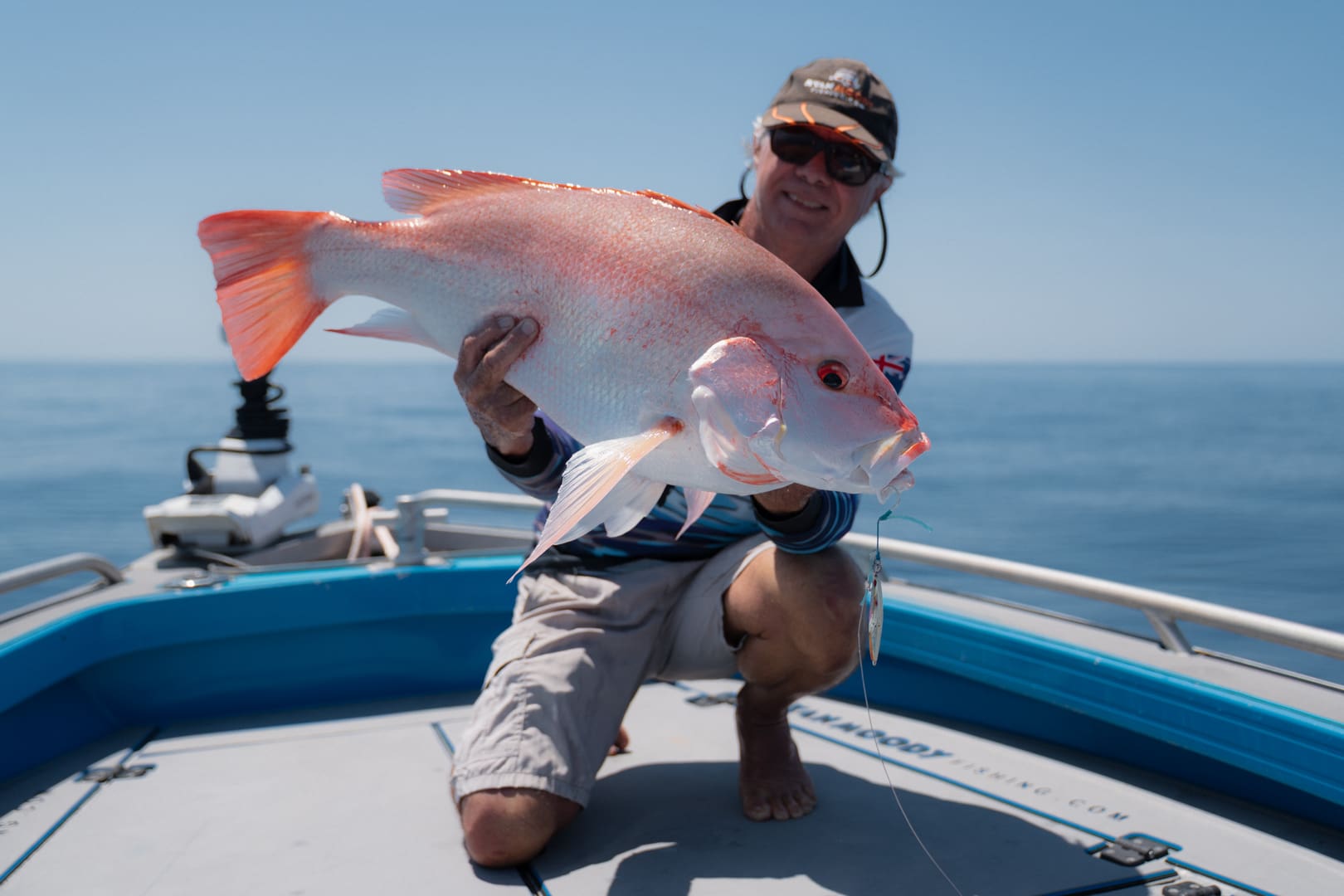
That does not mean depredation is always low. But it does show how strongly it depends on where and how you fish. Applying a single fixed rate across the entire commercial sector ignores that variability, and may not reflect what is actually happening on the water.
Why this is a big deal?
This setup does two things simultaneously:
- Adds a large amount of “missing fish” in recent years
- Changes how catch rates are interpreted (because more fish are assumed lost before landing)
4) Fishing Efficiency
The model assumes fishing becomes more efficient over time, at about 2% per year.
If efficiency increases, catch rates are adjusted downward. That can make it look like fish numbers are declining faster than they really are.
The question is whether efficiency has actually increased that steadily in recent years (Hard to say!).
Since GPS, spot lock, and sidescan – other than our courses teaching anglers all the tricks lol – what major improvements have taken place?
It seems questionable to apply a simple linear increase.

5) Fishing Efficiency and Depredation
The model also reduces assumed efficiency in recent years (from about 2% to ~1%) to account for rising shark depredation.
So depredation affects the model in two ways:
- It increases estimated fish losses
- It changes how catch rates are interpreted.
Because depredation isn’t well measured over time, if it’s overestimated, it can push the stock estimate lower through both pathways.
👉 What can you actually do about SHARK DEPREDATION?
If depredation is increasing and affecting catch rates, one of the few things you can control is where you fish.
Fishing the same pressured ground as everyone else usually means more sharks, more lost fish and less efficient trips.
Finding your own ground changes that.
- Offshore Opportunities Course – learn how to identify and fish less pressured offshore areas
- Wonky Holes Course – find small, overlooked structures that consistently hold quality fish
Both are built around the same idea. Fish smarter, not harder and avoid competing on the same marks where depredation is at its worst.
6) The Baseline Problem
This is the big elephant in the room!
Everything is compared to ONE key assumption: The stock in 1961 is treated as “unfished”.
BUT (And it’s a big but): The 1961 stock isn’t measured. It’s estimated by the model using assumptions about how the fishery works.
That same model is also used to estimate the current stock. So both the starting point and today’s estimate depend on the same assumptions.
If that baseline is wrong, the depletion estimate shifts with it, including the 28% figure.
The Bottom Line for QLD Fishers With Fishing Rules Based On This Data
This is not necessarily bad science. It follows standard methods.
But it is data-limited, assumption-heavy and sensitive to key inputs.
Some assumptions push the result up, others push it down, and we don’t know which dominates.
What this means for anglers:
The assessment provides one possible picture of the stock. It is not a direct measurement or a precise number.
And that matters when it feeds into fishing rules in QLD.
The main takeaway:
The 28% biomass figure should be treated as an estimate with uncertainty
- It depends on assumptions around stock structure
- It depends on depredation estimates
- It depends on fishing efficiency assumptions
- It depends on the 1961 baseline being correct
So… What This Could Mean for Nannygai Bag Limits in QLD
Presently the Nannygai bag limit is 9 in total including both large-mouth and small-mouth species combined.
I expect this to come down to 5 or less for large-mouth nannygai (saddletail) and possibly a boat limit.
I expect the commercial guys will bear the brunt of the restrictions, which may be applauded by recreational anglers.
However reality is many Australians can no longer afford or access fresh Aussie seafood and that I think is a shame. Especially when our fisheries are some of the most heavily regulated in the world. Quite honestly, I don’t have a problem catching a good feed of fish… So there must be plenty out there!
We’ve had green zones since 2004 with 34% of the area shut to fishing. This was “sold” to us as a solution to overfishing as these areas are full of big breeding Nannygai, their larvae spilling over and replenishing outside areas.
If they are so ineffective at protecting stocks, get rid of the green zones!
Reality is, Nannygai are a tropical snapper. The further north you go the more at home they are. Due to remoteness, Lizard Island to the tip is around 600km acting as a sanctuary with very large green zones and very little fishing.
Just because there is no data from these areas does not mean there are no fish in these areas.
Personally, I think an increase in size limit is unlikely. Nannygai are generally caught in deeper water and suffer from barotrauma, so releasing smaller specimens is simply a waste as they have a lower chance of survival the deeper they are caught.
Sustainability
We ALL want sustainable fisheries so we can go catch a feed and the pro’s can make a living and feed Aussies that can’t fish.
So for me personally I am happy to take a cut on the bag limit for myself. My wife won’t eat frozen fish anyhow so we rarely take many – preferring to make another trip and catch another.
But with fuel prices through the roof, and many anglers making long trips to put the boat in. Or weather prohibiting regular trips.
It’s imperative that Fisheries Managers get this right and don’t punish everyday Australians due to uncertainty in stock assessments.
The management measures introduced after the mackerel assessment were significant, and the subsequent independent review highlighted a number of uncertainties and limitations in the modelling. That raised serious concerns that the stock was underestimated, and left many of us frustrated with the outcome.
People lose their livelihoods over this and everyday Aussies lose the ability to access freshly caught Aussie seafood.
Stock assessments are tools, not truths!
They are only as strong as the data going in and the assumptions holding them together. For saddletail snapper/nannygai, both deserve closer scrutiny before decisions are made that affect fishing limits in QLD and access to the fishery.