


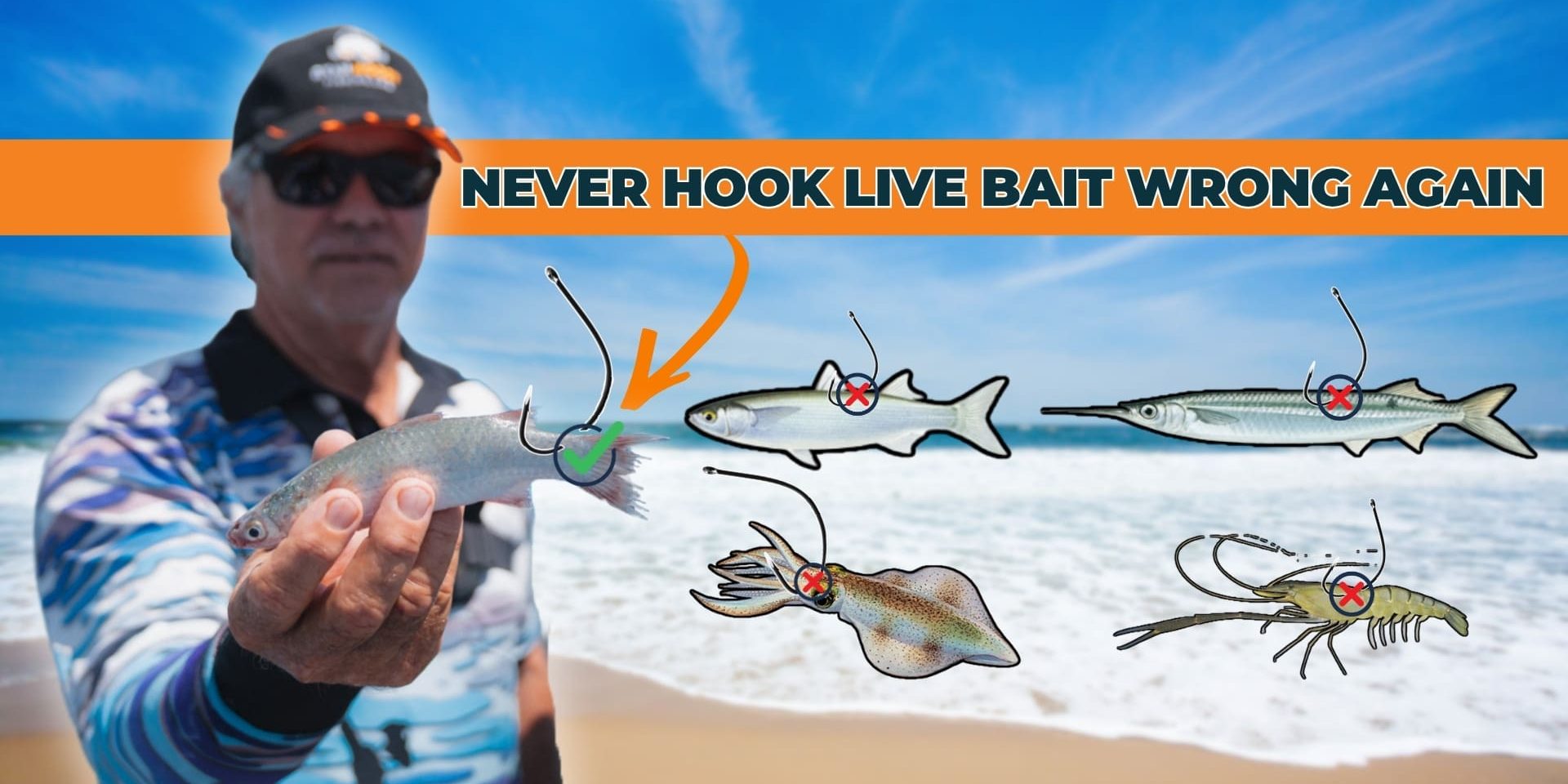
One of the most common mistakes I see is anglers hooking live bait in the wrong spot and wondering why it doesn’t get eaten.
The problem is, how you hook live bait makes a massive difference and can often be the deciding factor in whether you catch your target species or not.
In this guide, I’m going to break down the simple rules I follow for every species, so you know exactly where to hook live bait depending on the situation.
And at the end, I’ll show you exactly how I hook each bait species step-by-step in a video.
Why Hooking Live Bait Properly Matters
When it comes to how you hook your live bait, it’s not just about keeping the fish on the hook like with dead bait.
It’s about presentation.
If your bait:
- Spins in the current
- Looks unnatural
- Dies too quickly
…you’re making it harder for your target fish to commit.
A good live bait hook setup does three things:
- Keeps the bait alive longer
- Lets it move naturally
- Presents it in a way predators expect
That’s what triggers the bite.
How to Hook Live Bait (The Golden Rule)
I don’t hook live bait randomly. There’s a simple rule I follow every time.
It comes down to:
- Size
- Movement
- Presentation
But more importantly, it comes down to this:
👉 Where can I hook this bait so it stays alive, holds properly, and swims naturally without spinning?
That’s the real key when you’re working out how to hook live bait fish properly.
Think About the Fish’s Structure
Every baitfish is built differently, and that plays a big role in where to hook live bait.
Some fish are strong and solid through the head, while others are soft or thin through the tail.
So instead of blindly following a rule, I’m always looking at:
- Where is the strongest part of the bait?
- Where will the hook hold without tearing out?
- Where can I hook it so it stays alive longer?
For example:
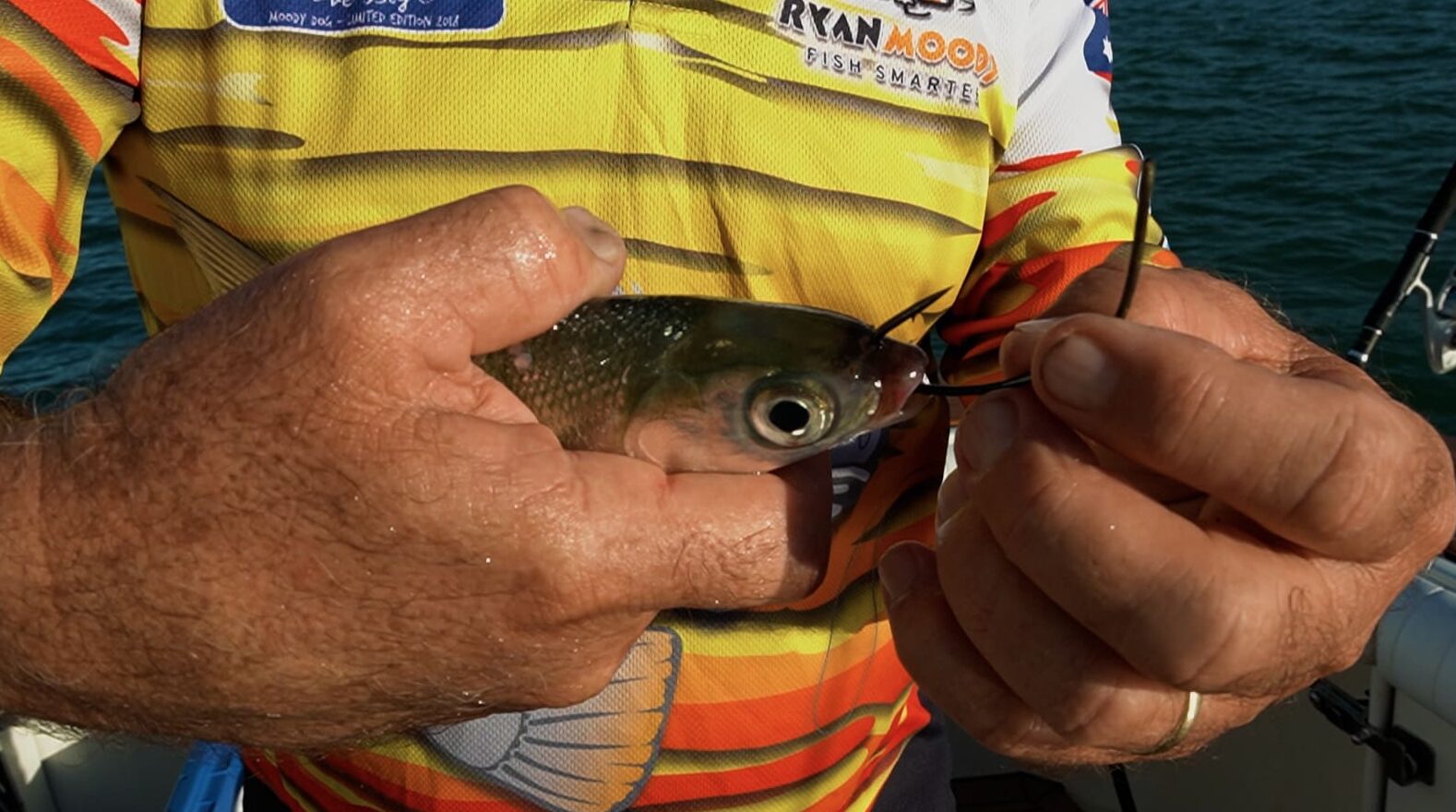
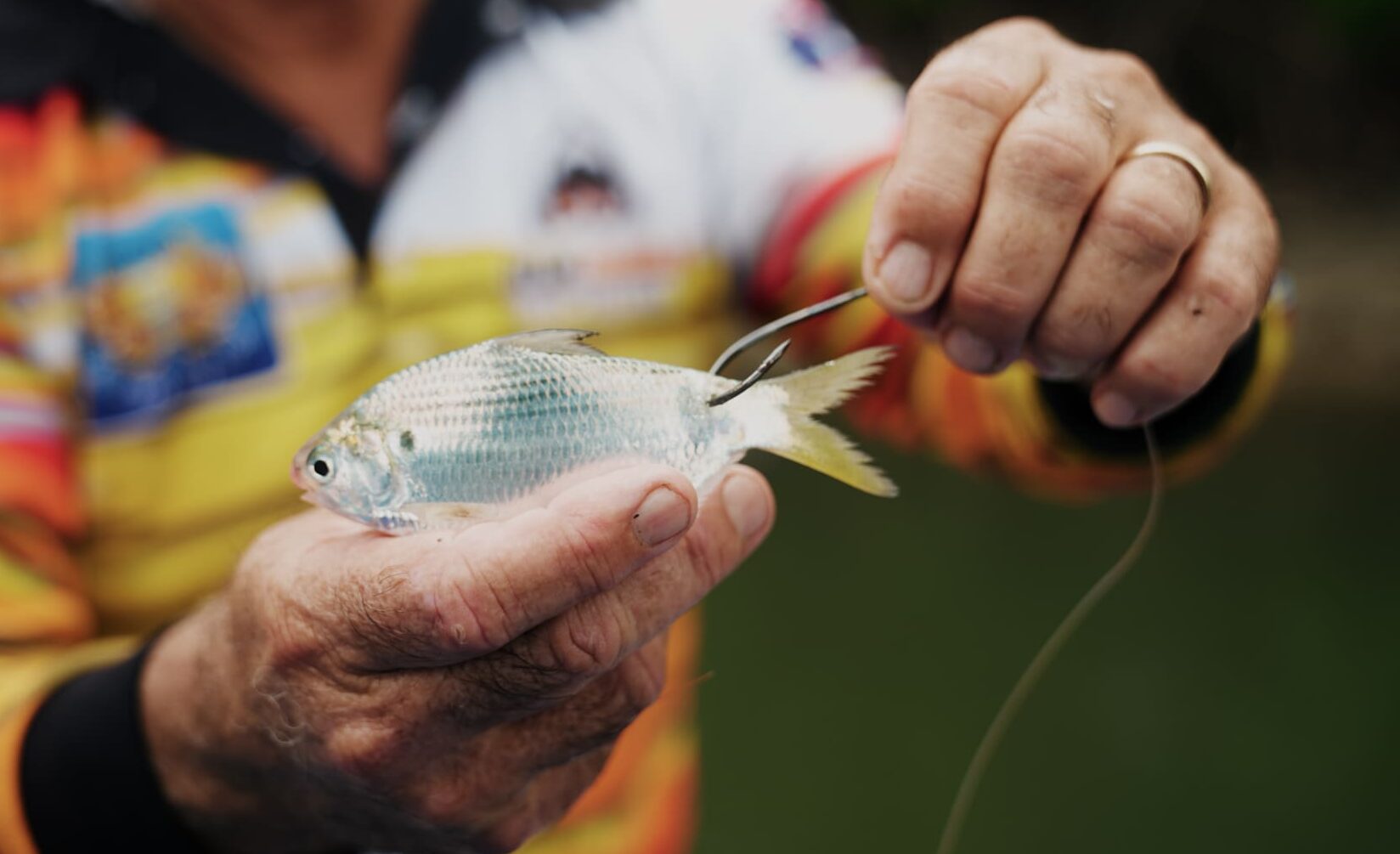
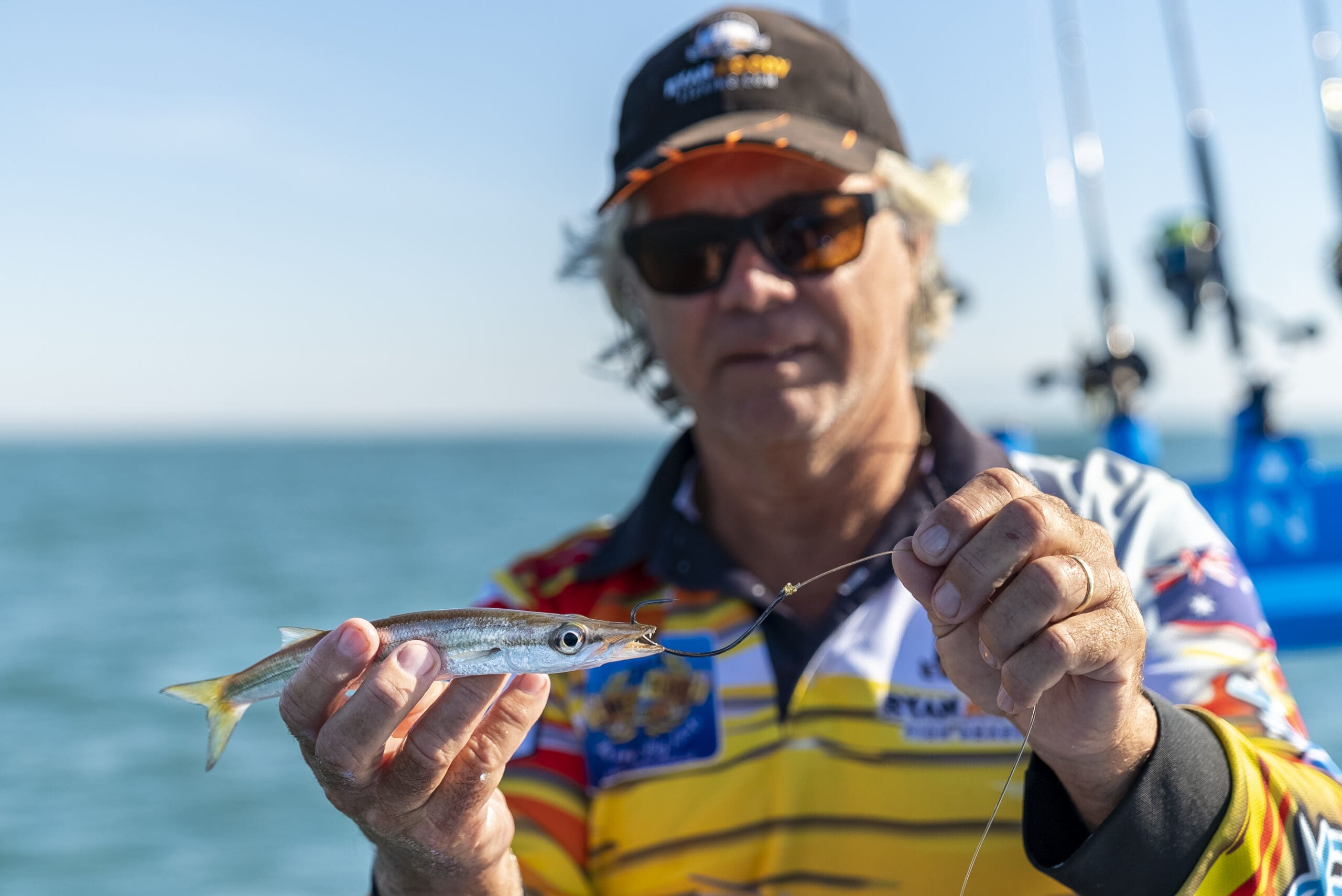
So when people ask me how to hook up live bait fish, this is what I’m thinking about first — not just size, but structure.
Movement Always Comes First
The whole point of live bait is to look natural in the water.
If your bait:
- Spins
- Twists your line
- Or moves stiff and awkward
…it’s not going to get eaten as well.
So before I even place the hook, I’m thinking: “How is this bait going to move once it’s in the water?”
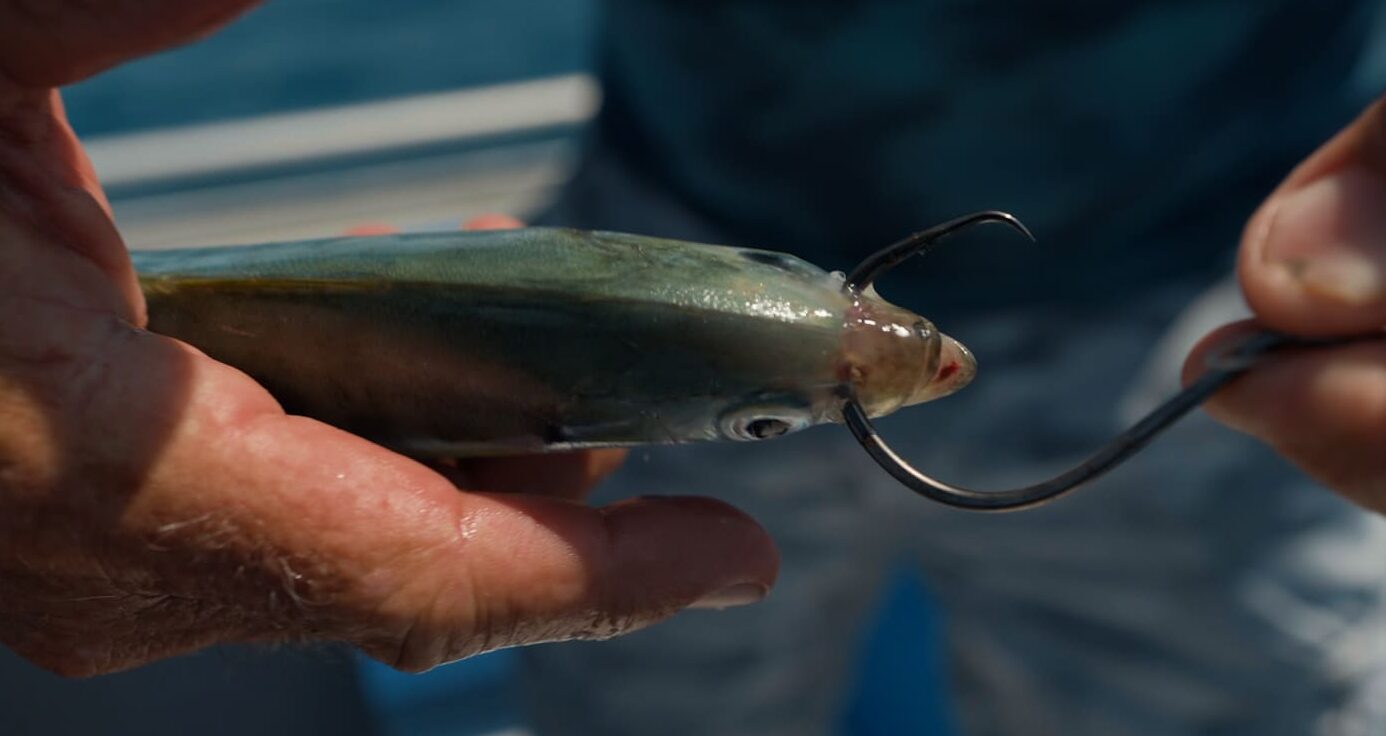
- Hooking through the nose lets bigger bait swim forward naturally.
- Hooking near the tail lets smaller bait struggle without spinning or allows prawns to flick naturally
However, when you hook your baitfish through the middle of the back, you create a pivot point where the current hits it side-on and forces it to spin plus dies quicker as water can’t flow through the gills.
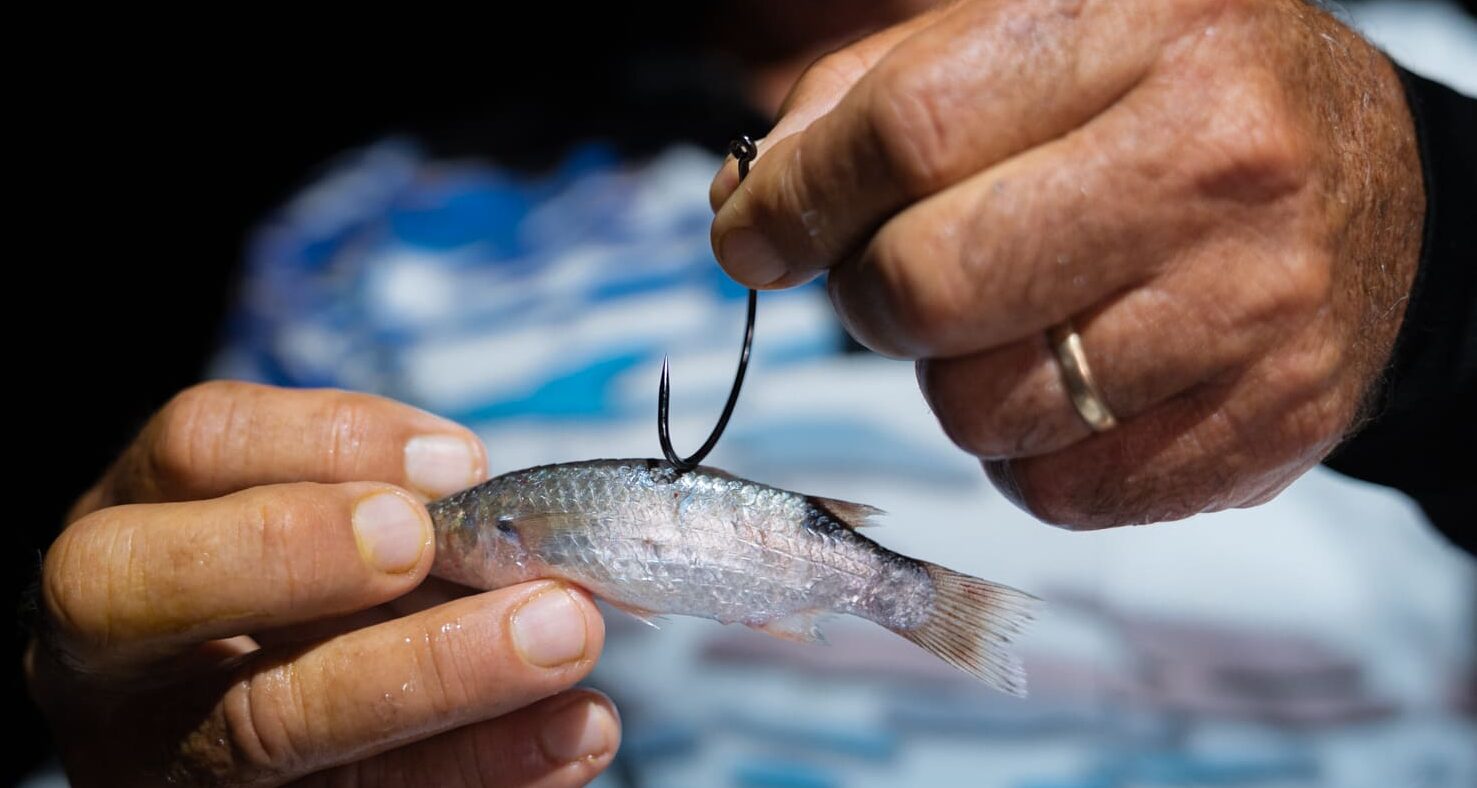
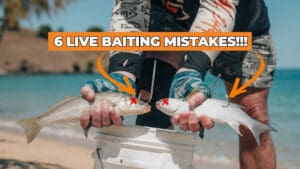
In my previous blog, I break down the most common mistakes anglers make when live baiting (not just hook placement).
You can check it out here: 6 Biggest Live Bait Mistakes.
Match the Hook Placement to the Bait
There’s no one-size-fits-all answer to where to hook live bait.
Instead, I match the hook placement to:
- The size of the bait
- The shape and strength of the bait
- And how I want it to present in the water
Here’s how that looks in practice:
- Bigger, stronger bait → hooked through the nose area
- Smaller or softer bait → pinned near the tail
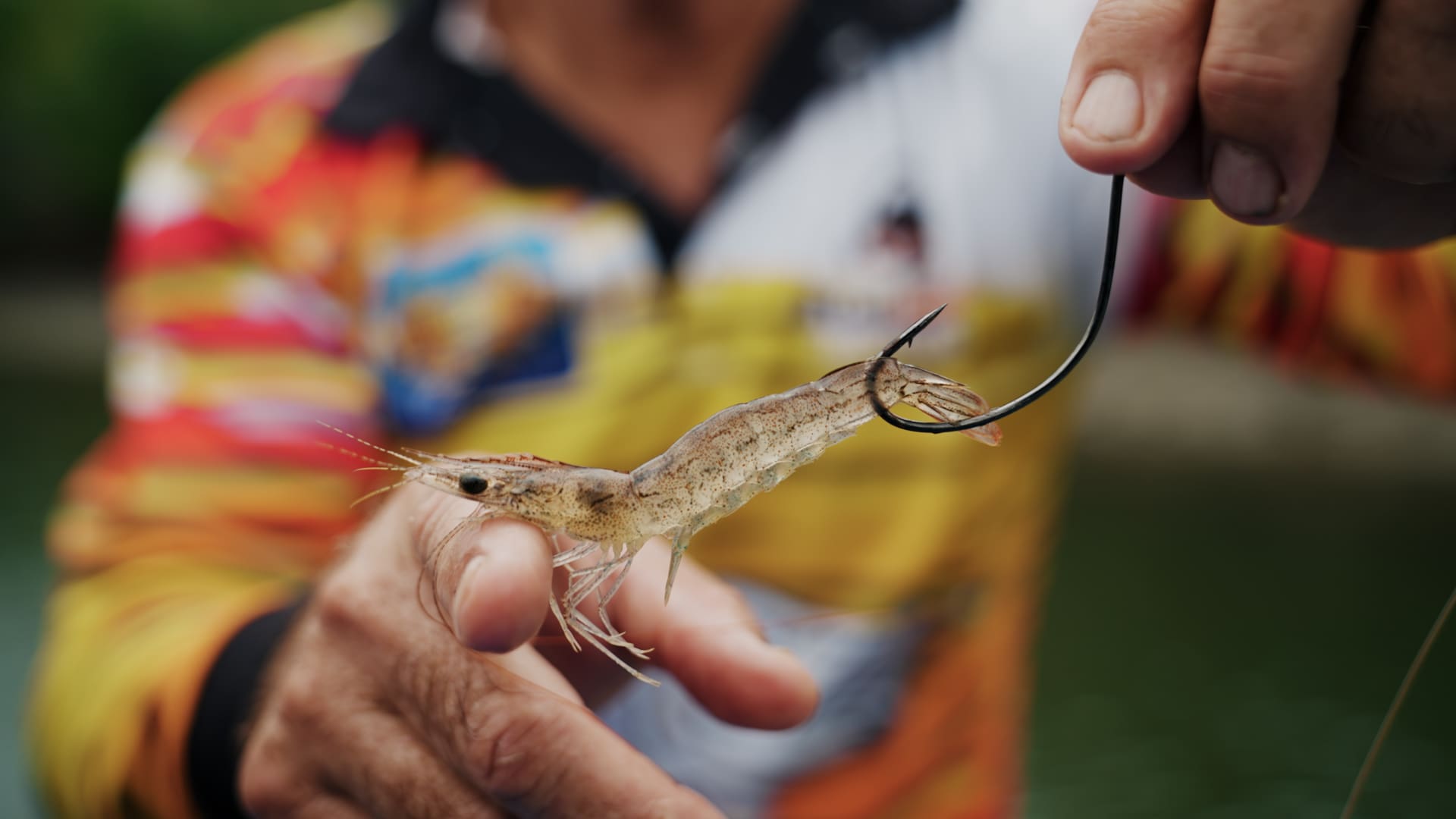
- Certain species → slight adjustments based on how they’re built
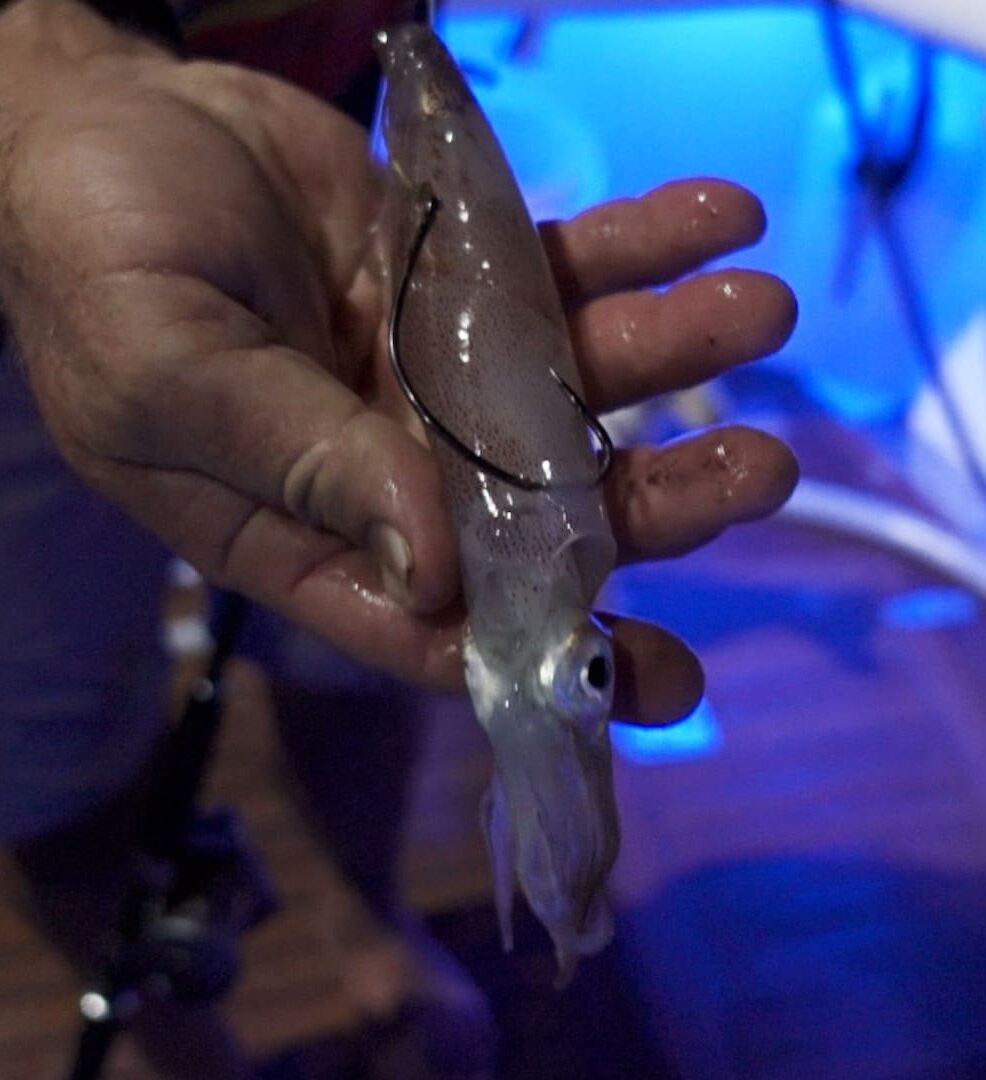
Watch How to Hook Live Bait (Step-by-Step)
Have a look below as I go through exactly how I hook each live bait species step-by-step.